Facing the climate emergency and the rapid erosion of forests worldwide, the European Union has adopted Regulation (EU) 2023/1115 aimed at reducing the environmental impact of consuming products linked to deforestation. This regulation notably imposes a due diligence obligation on companies importing or marketing certain products in the EU.
In this article, we will explore in detail what the due diligence statement is, who is affected, what steps to take, and what impacts to expect for European companies and their partners.
What is the due diligence statement?
Due diligence (or due diligence in English) is a preventive process that requires economic operators to verify that the products they import or sell in the European Union do not contribute to deforestation or forest degradation.
It involves collecting, analysing, and retaining information to ensure the traceability of the products concerned from their origin to their placement on the European market.
Products covered by Regulation (EU) 2023/1115
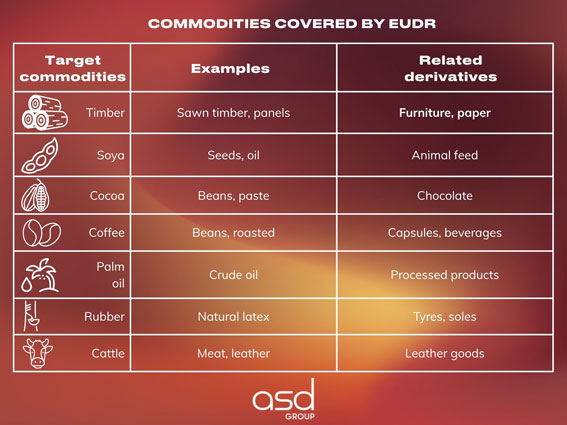
The regulation covers a range of products considered to be at high risk of contributing to deforestation:
Targeted products
Examples
Related derivatives
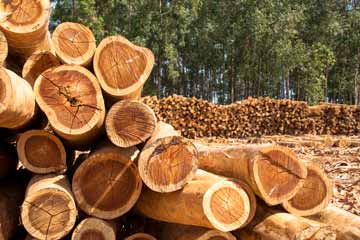
Timber
Sawn timber, panels
Furniture, paper
Soya
Seeds, oil
Animal feed
Cocoa
Beans, paste
Chocolate
Coffee
Beans, roasted
Capsules, beverages
Palm oil
Crude oil
Processed products
Rubber
Natural latex
Tyres, soles
Cattle
Meat, leather
Leather goods
The mentioned products are subject to due diligence only if they were produced after 31 December 2020.
Which products are targeted by the European Regulation on Deforestation (EUDR)?
Main objectives of the regulation
The European regulation against deforestation pursues several environmental and economic objectives:
Preserve primary forests and natural ecosystems
Reduce CO2 emissions linked to deforestation
Improve transparency of supply chains
Combat imported deforestation
Hold companies accountable in the agri-food and forestry sectors
Key dates to remember
Date
Event
31 December 2020
Production cut-off date for the products concerned
29 June 2023
Official publication of Regulation (EU) 2023/1115 in the OJEU
30 December 2025
Entry into force of the regulation for most companies
30 June 2026
Application for micro-enterprises and certain SMEs
Companies concerned by the due diligence statement
Companies involved in the due diligence obligation.
The regulation applies to two types of economic operators:
Category
Definition
Main obligations
Operators
Importers, exporters or manufacturers placing products on the market
Full due diligence
Traders
Entities that sell or distribute products downstream
Retention of information provided by operators
SMEs are also affected, although some obligations may be eased.
The countries classified as low risk are as follows:
Afghanistan, Albania, Algeria, Andorra, Antigua and Barbuda, Argentina, Armenia, Australia, Austria, Azerbaijan, Bahamas, Bahrain, Bangladesh, Barbados, Belarus, Belgium, Belize, Benin, Bhutan, Bosnia and Herzegovina, Brunei Darussalam, Bulgaria, Burkina Faso, Burundi, Cabo Verde, Cambodia, Cameroon, Canada, Central African Republic, Chad, Chile, China, Colombia, Comoros, Congo, Costa Rica, Côte d’Ivoire, Croatia, Cuba, Cyprus, Czechia, Djibouti, Dominica, Dominican Republic, Egypt, Estonia, Eswatini, Fiji, Finland, France, Gabon, Gambia, Georgia, Germany, Ghana, Greece, Grenada, Guatemala, Guinea, Guinea-Bissau, Guyana, Haiti, Honduras, Hungary, Iceland, India, Indonesia, Iran, Iraq, Ireland, Israel, Italy, Jamaica, Japan, Jordan, Kazakhstan, Kenya, Kiribati, Kuwait, Kyrgyzstan, Laos, Latvia, Lebanon, Lesotho, Liberia, Libya, Liechtenstein, Lithuania, Luxembourg, Madagascar, Malta, Maldives, Mali, Marshall Islands, Mauritania, Mauritius, Mexico, Micronesia, Monaco, Mongolia, Montenegro, Morocco, Mozambique, Myanmar, Namibia, Nauru, Nepal, Netherlands, New Zealand, Nicaragua, Niger, Nigeria, North Macedonia, Norway, Oman, Pakistan, Palau, Palestine, Panama, Papua New Guinea, Paraguay, Peru, Philippines, Poland, Portugal, Qatar, Republic of Korea, Republic of Moldova, Romania, Rwanda, Saint Kitts and Nevis, Saint Lucia, Saint Vincent and the Grenadines, Samoa, San Marino, Sao Tome and Principe, Saudi Arabia, Senegal, Serbia, Seychelles, Sierra Leone, Singapore, Slovakia, Slovenia, Solomon Islands, Somalia, South Africa, South Sudan, Spain, Sri Lanka, Sudan, Suriname, Sweden, Switzerland, Syrian Arab Republic, Tajikistan, Thailand, Timor-Leste, Togo, Tonga, Trinidad and Tobago, Tunisia, Turkey, Turkmenistan, Tuvalu, Uganda, Ukraine, United Arab Emirates, United Kingdom, United States, Tanzania, Uruguay, Uzbekistan, Vanuatu, Venezuela, Vietnam, Yemen.
Countries classified as high risk
Several countries have been identified as high risk, leading to a complete ban on importing timber and its derivatives within the European Union.
Belarus
North Korea
Myanmar
Russian Federation
Countries classified as standard risk
Countries that are neither in the low-risk nor high-risk categories are automatically considered as presenting a standard risk. In this case, economic operators are required to implement all due diligence obligations before placing their products on the European Union market.
Examples of standard risk countries:
Brazil
Cameroon
Democratic Republic of the Congo (DRC)
Côte d’Ivoire
Through regular exchanges between the countries concerned and the European Commission, as part of a structured dialogue, this classification may evolve over time.
3. Risk mitigation measures
In case of identified risks, the company must implement corrective actions:
Change supplier
Request additional audits or certifications
Suspend market placement
Declaration and traceability in the European information system
EUDR compliance: ASD Group supports you with your due diligence statements.
From 30 December 2026, all operators must submit their due diligence statement in a centralised IT system managed by the European Commission, TRACES-NT.
Each declaration must include:
Operator’s identity
Information on the product and its traceability
Results of the risk assessment
Mitigation measures where applicable
The system will assign a unique identifier to each declaration, facilitating checks by customs authorities.
Penalties for non-compliance
Member States are responsible for applying effective, proportionate, and dissuasive penalties.
Penalties may include:
Administrative fines (up to 4% of the company’s annual turnover)
Confiscation of products
Temporary import ban
Random checks will be carried out by competent national authorities to verify the compliance of declarations.
Impacts for European companies
Opportunities:
Promotion of sustainable practices
Better control of supply chains
Preferential access to the European market in case of compliance
Challenges:
Complexity of plot geolocation
Increased administrative burdens
Need to train staff and review purchasing processes
Best practices to adopt now
To anticipate the regulation’s requirements, companies can:
Early compliance can provide a significant competitive advantage.
Practical cases: How to complete a standard declaration?
Here is an example of a simplified summary table:
Element
Required information
Product
Cocoa beans
Origin
Côte d’Ivoire
Geolocation
Latitude/longitude of plantations
Production date
February 2024
Volume
12 tonnes
Supplier
Cocoa Ivoire Cooperative
Certification
Rainforest Alliance
Risk assessment
Standard risk
Measures
Third-party certification, supplier audit
Sector focus: Which sectors are most impacted?
Timber sector
Highly affected by geolocation and forestry certification requirements (FSC, PEFC), the sector will need to strengthen traceability, particularly for imported furniture.
Agri-food sector (coffee, cocoa, palm oil)
Companies will need to prove that the raw materials used do not come from deforested areas. Partnerships with certified cooperatives will be essential.
Leather and beef sector
Traceability of cattle from pastures to the slaughterhouse must be demonstrated, a major logistical challenge for some long supply chains.
Recognised certifications and the role of labels
Certifications are not mandatory but provide significant proof of risk mitigation. Here are some examples:
Certification
Sector
Main advantage
FSC
Timber
Sustainable forest management
PEFC
Timber
Certified traceability chain
RSPO
Palm oil
Sustainable and verified production
Rainforest Alliance
Cocoa, coffee
Strict social and environmental criteria
Companies can combine certifications, internal audits and geographical data to ensure their compliance.
Regulation (EU) 2023/1115 marks a major turning point in the fight against imported deforestation. The due diligence statement becomes a central tool of European environmental policy, committing companies to take concrete action for the sustainability of forests.
Economic operators must start adapting now to these new obligations to avoid sanctions and market disruptions. Preparing their information systems, training their teams, and building long-term relationships with responsible suppliers will be key to ensuring compliance.
ASD Group assists you in the context of the EUDR
In response to the new requirements of Regulation (EU) 2023/1115, ASD Group supports businesses in ensuring compliance for their import or export operations involving products at risk of deforestation. Our experts assist you with entering the due diligence statement in the TRACES-NT system.
Thanks to our expertise in customs regulations, we ensure the customs compliance of your products within the European Union, while reducing your risk of penalties and customs clearance delays.
Get in touch with our experts now to anticipate your obligations, secure your imports, and ensure your products comply with the European regulation against deforestation.
When does electronic invoicing become mandatory in Germany? B2B electronic invoicing is being gradually made mandatory in Germany. Since 1 January 2025, companies established in…
The new Union Customs Code (Regulation (EU) 2026/2108) introduces “Union handling fees” (Union handling fees). Announced amount: €2 per item imported from third countries and…
6 October 2026
contact our experts
Do you want to know more about our offers? Contact us and our experts will reply shortly.
Table of Contents
E-Reporting in France
From 1 September 2026 · Foreign large companies & medium-sized enterprises, get ready! Find out more


 Chat GPT
 Mistral
 Claude
 Perplexity
 Grok
Grok